For over four centuries, Presbyterians have been responding to the call of Jesus Christ, taking the gospel into the world and bearing witness to Christ’s saving love to the ends of the earth. Today the Holy Spirit is still on the move, calling us to share in what God is doing in the world.
— Who We Are, Presbyterian Church (U.S.A.)
Shaped by its Reformed theology, history, and representational form of leadership, the Presbyterian Church (U.S.A.) faithfully works to serve Christ in the world through new and existing communities of faith, hope, love, and witness.
A Short History of Presbyterianism
The Presbyterian Church (U.S.A.) is a Protestant denomination created in 1983 from a merger of branches of the Presbyterian Church that separated about the time of the U.S. Civil War. Presbyterianism, however, traces its roots back to the European Protestant Reformation of the 16th century, with much of its theology influenced by the writings of French theologian John Calvin (1509–1564). John Knox (c.1514–1572), who studied under Calvin, eventually returned to his native Scotland to lead the Reformation there. He founded the Church of Scotland, assuring the replacement of the Scottish Catholic faith with Presbyterianism rather than the Anglicanism of England.
The Ulster Scots introduced Presbyterianism to Ireland and immigrants from both Scotland and Ireland brought the faith to North America in the 17th century. Eventually, disagreements over topics such as evangelicalism, revivalism, and fundamentalism led to the splintering of the church around the time of the American Civil War in the 19th century. However, the 20th century saw various factions join forces and now the Presbyterian Church (U.S.A.) is the largest Presbyterian denomination in the United States.
The beliefs of the Presbyterian Church (U.S.A.) are outlined in the Book of Confessions.
The Presbyterian Church (U.S.A.) has a representative form of government. Each congregation is governed by its session, comprised of the pastor(s) and a group of elected elders. A presbytery is comprised of all of the congregations in a local geographical area and a synod is made up of at least three presbyteries in a larger geographical area. The General Assembly is the highest governing body in the church.
- General Assembly of the Presbyterian Church (U.S.A.)
- Synod of Alaska-Northwest
- Presbytery of the Inland Northwest
- Session of First Presbyterian Church of Sandpoint
- Presbytery of the Inland Northwest
- Synod of Alaska-Northwest
In the Beginning
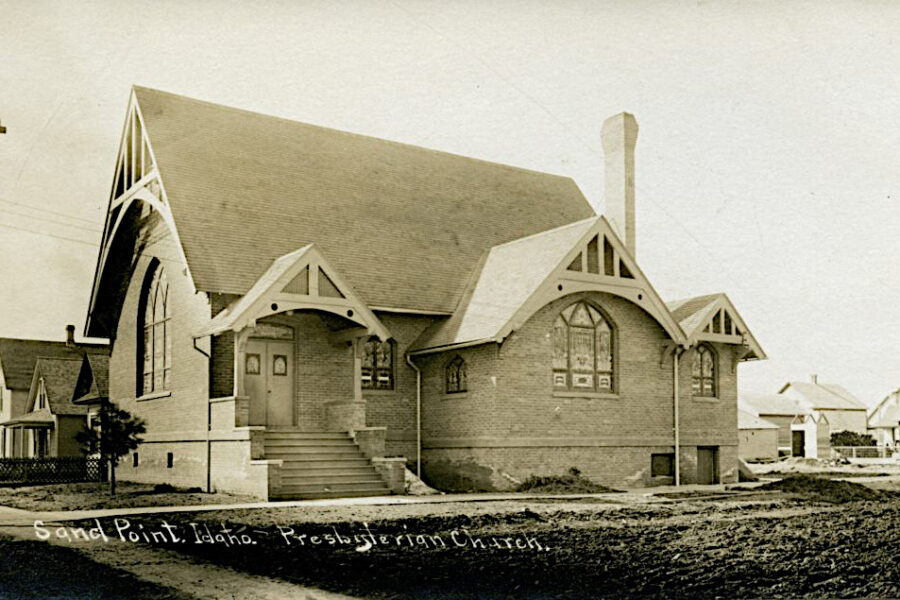
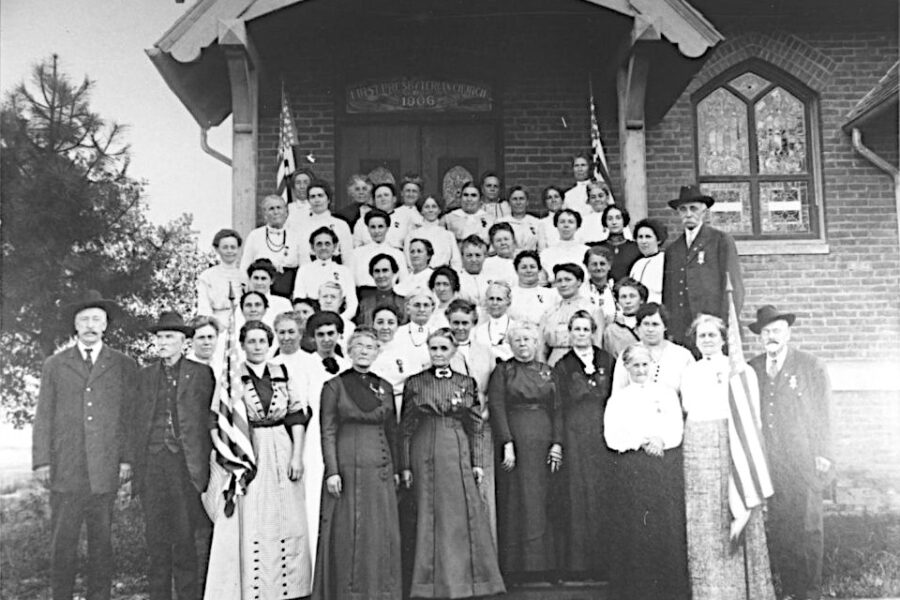
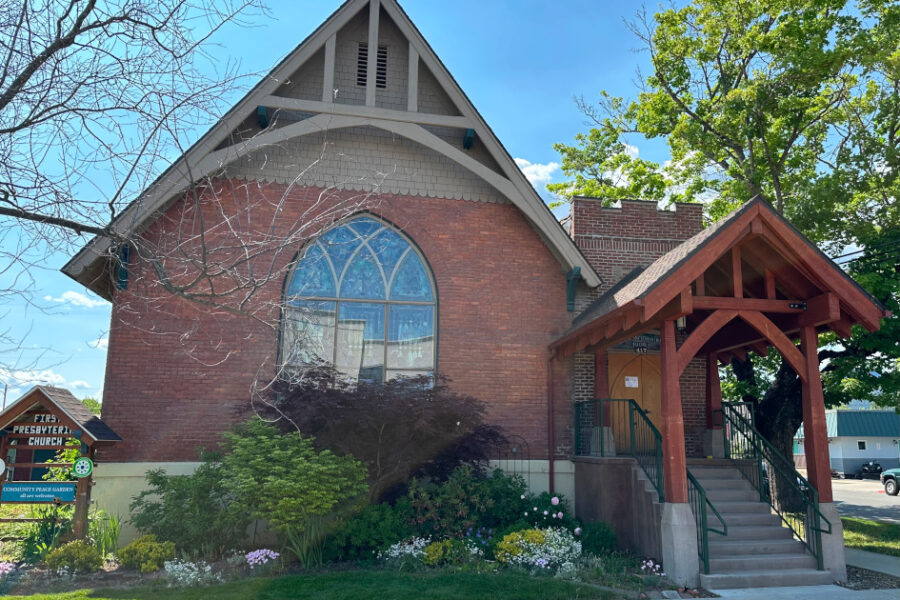
In 1901, a handful of Presbyterians began meeting at The Odd Fellows Hall in Sandpoint and in 1903, the Presbytery of Spokane formally acknowledged First Presbyterian Church of Sandpoint. The church was built on land donated by the Farmin family of Sandpoint. Constructed in 1906, the present brick building cost a total of $4,500 to put up and that included the stained glass windows. The Reverend Samuel Harris, the first pastor, provided inspiration, planning, and much of the labor for the original building. It was Pastor Harris who insisted on the stained glass windows that contribute to making sanctuary the sacred, warm gathering space we experience today.
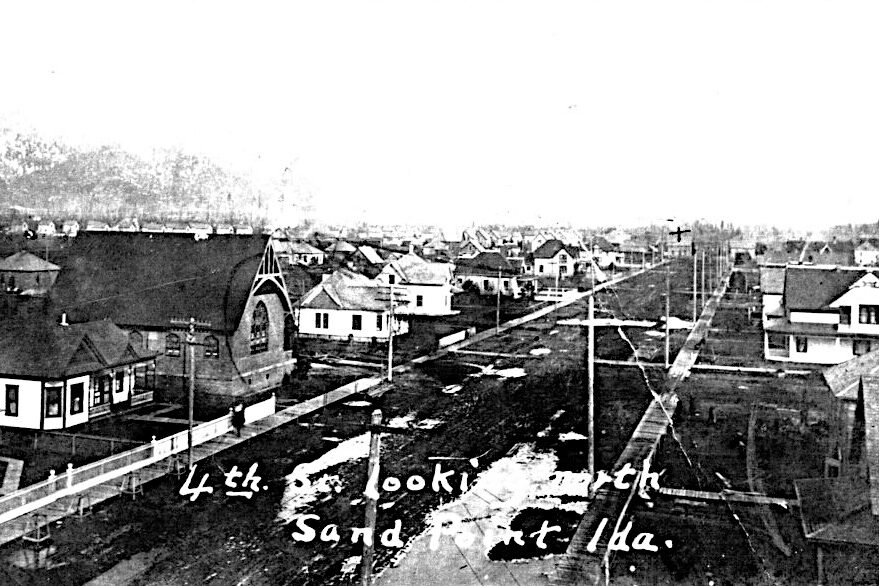 First Presbyterian Church dominates the scene in this early photograph of Sandpoint looking north on Fourth Avenue.
Earth Care Congregation
An Earth Care Congregation is a designation within the Presbyterian Church (U.S.A.) that helps people know we care about the Earth and are willing to do things — sometimes very basic things to practice care and educate others. An Earth Care Congregation commits to the “Earth Care Pledge,” accomplishing a number of actions in four categories: worship, education, facilities and outreach.
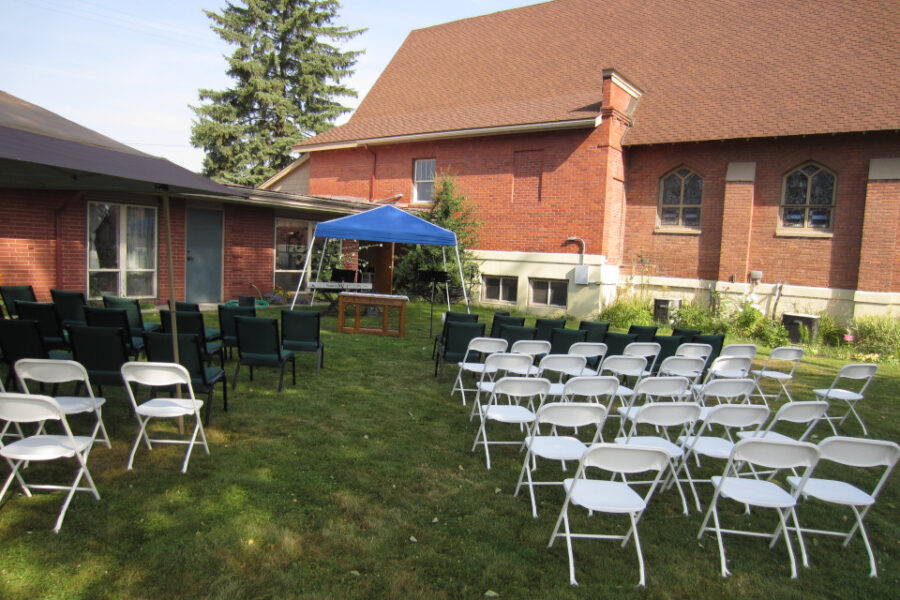
First Presbyterian Church of Sandpoint joined the program in 2015. Some initiatives include recycling, composting, changing the lighting in our building to reduce our carbon footprint, and changing our yard to a Peace Garden with a design that will reduce water usage.
Join us in this vital, meaningful work for God’s creation.
Land Acknowledgement Statement
We would like to acknowledge we are gathered on the Indigenous lands of Turtle Island, the ancestral name for what is now called North America.
More specifically, we acknowledge the Kalispel, Kootenai, Spokane, Colville, and Coeur d’Alene Tribes, sovereign nations, who since time immemorial have been the caretakers of this region’s lands and waterways.
These Tribal nations have made significant contributions to the vibrant fabric of our broader community. We honor and respect our enduring relationship with the Tribes, the land, and the water.
This Land Acknowledgement Statement was approved by the Kalispel Tribe of Indians Council in September 2023.